
On 14 July, the Polaris Programme held a study visit and training session in Mena about the Role of Starostas in Preventing and Responding to Domestic Violence. The event brought together around 30 starostas and other representatives of the Mena, Kozelets, and Bobrovytsia hromadas in Chernihiv region.
The training aimed to strengthen the capacity of starostas as key actors in the system for preventing and responding to domestic violence at the hromada level, deepen their knowledge, and develop their practical response skills.
Together with Polaris Programme experts, participants explored the forms of domestic violence, key concepts, the legal and regulatory framework, and the main approaches to response. Particular attention was paid to the role of starostas in local systems for preventing and responding to violence, the development of general and specialised services for survivors, and the organisation of prevention and awareness-raising activities in settlements.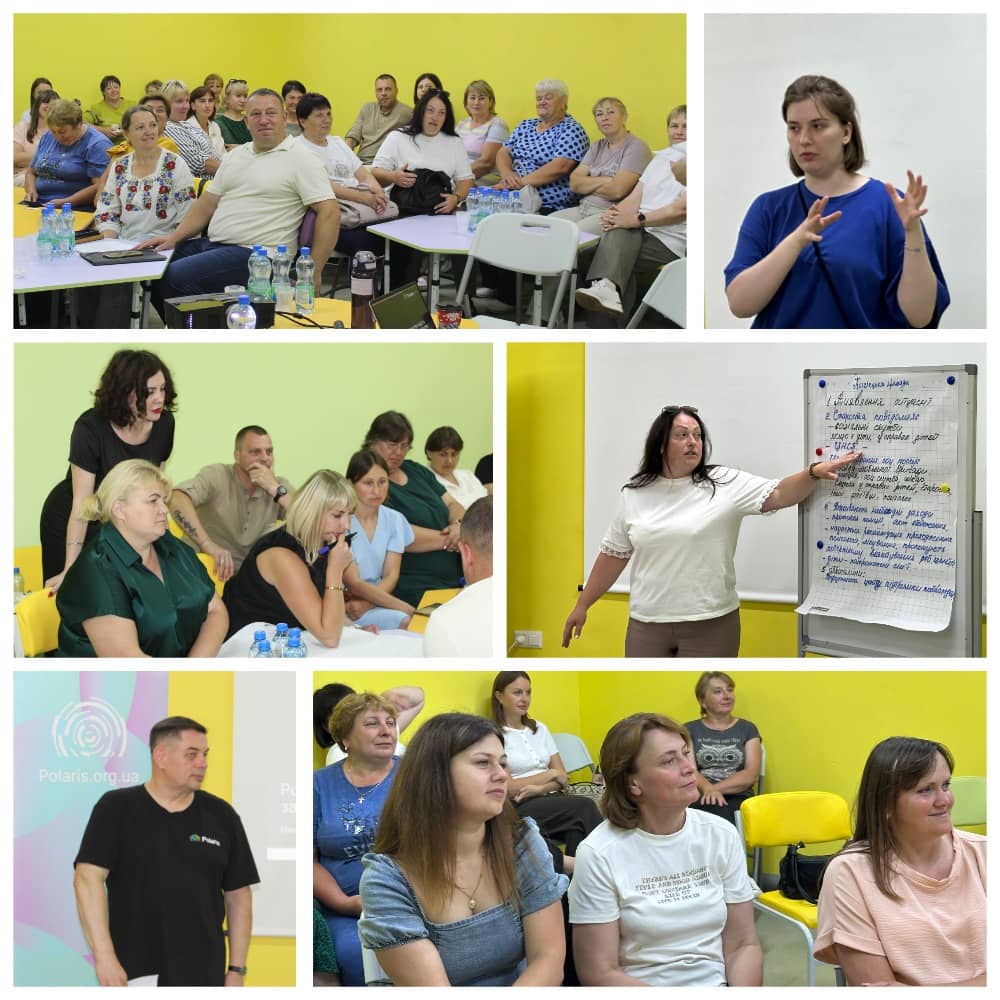
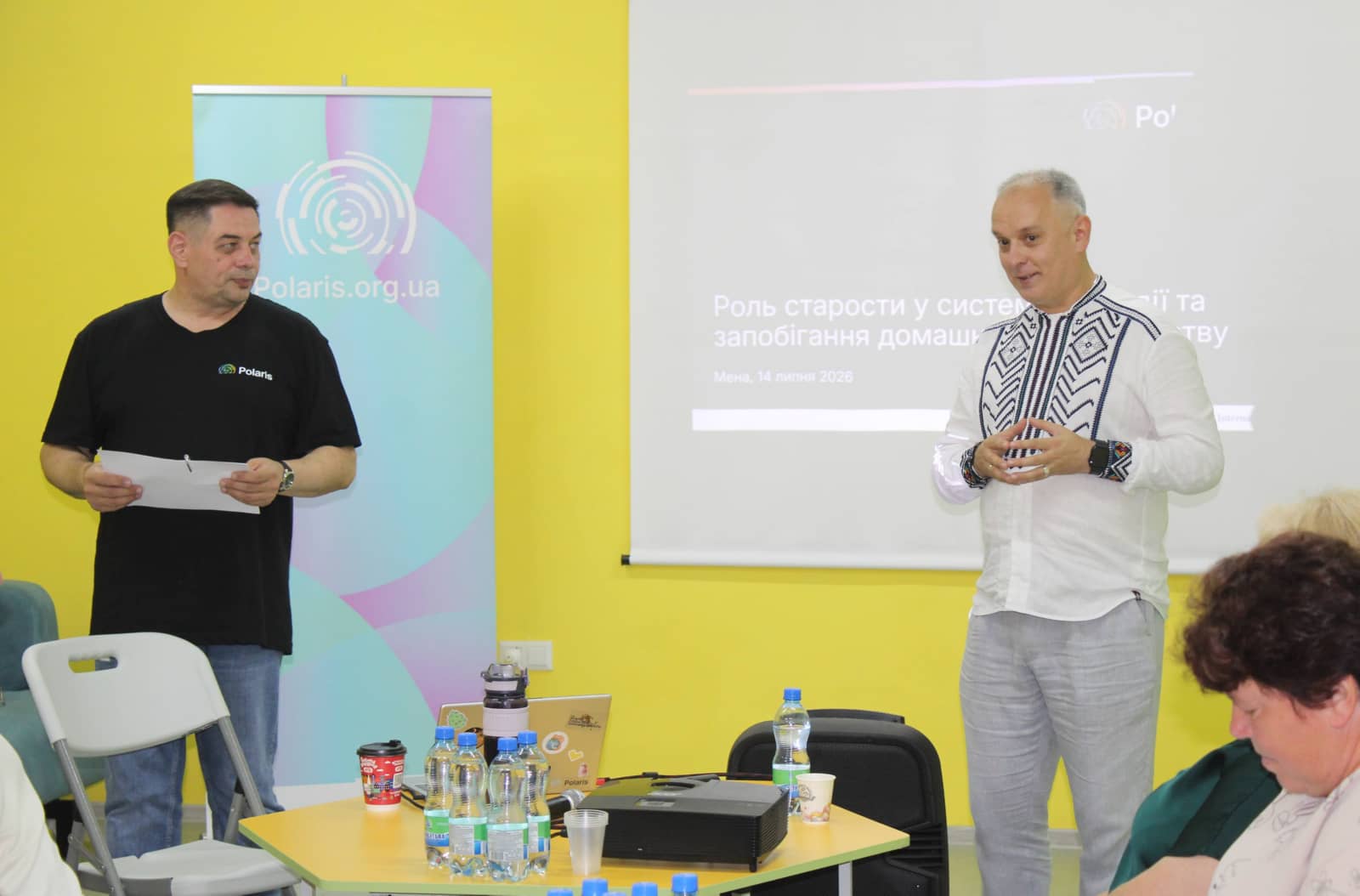
One of the key focuses was understanding the boundaries of a starosta’s responsibility. According to Andrii Matsokin, Coordinator of the Starostas Unit at the Polaris Programme, “A starosta’s role is not to investigate personal conflicts or reconcile the parties. They must identify risks in a timely manner and act within the scope of their authority — not replace the police, social services, or other professionals, but respond promptly in accordance with the law, provide the necessary information, and engage the relevant hromada services.”
During the practical sessions, the starostas examined specific situations that may arise in settlements and worked through possible response procedures. Participants learned how to act using a survivor-centred approach that prioritises the person’s safety, needs, and rights.
“A starosta is often among the first to learn about difficult situations in their hromada. For me, it was particularly valuable to examine real cases together with the starostas, exchange experience, and see how this work is organised in other hromadas. After the training, we have a better understanding of what we can improve in our own hromada, particularly in the areas of prevention and public awareness,” said Yurii Stalnichenko, Secretary of Mena City Council.
As part of the study visit, participants also learned about the experience of the Mena hromada. A Safe Space operates at the local Centre for Social Services, supporting women and girls affected by the war and domestic violence.
These training sessions are part of the Polaris Programme’s systematic support aimed at developing the institution of starostas in hromadas and strengthening their capacity to respond to residents’ needs, including gender-related issues. The training in Mena was the fifth in this series of thematic learning events organised by the Polaris Programme. Previous sessions were held in Kolomyia, Sarny, Boyarka, and Horokhiv, bringing together starostas and representatives of partner hromadas from different regions of Ukraine. A similar study visit and training session is planned for September in Zboriv, Ternopil region.

