
A situational analysis based on a survey conducted by the Polaris Programme in spring 2025 revealed a notable increase in Ukraine’s institutional capacity in the field of veteran policy. At the same time, it highlighted a number of critical challenges, particularly in hromadas outside major cities. The expansion of veteran spaces and the growing number of veteran support professionals represent real progress, yet these efforts require sufficient resources, systematic staff training, and unified service delivery standards.
Particular attention is needed for small and rural hromadas, where the existing infrastructure is often inadequate and human resource capacity limited. At this level, the gap between declared national policies and the real needs of veterans, female veterans, and their families is most apparent. Creating veteran spaces that truly respond to individual needs requires not only facilities and equipment, but also human resources, trust, and flexible management approaches.
In this context, the development of horizontal cooperation among hromadas, state institutions, veteran organisations, and civil society actors is more relevant than ever. This approach not only allows successful practices to scale, but also builds sustainable partnerships that can advocate for meaningful change. Support programmes such as Polaris serve as catalysts by providing hromadas with both expert guidance and frameworks for strategic planning and the implementation of new veteran policy models at the local level.
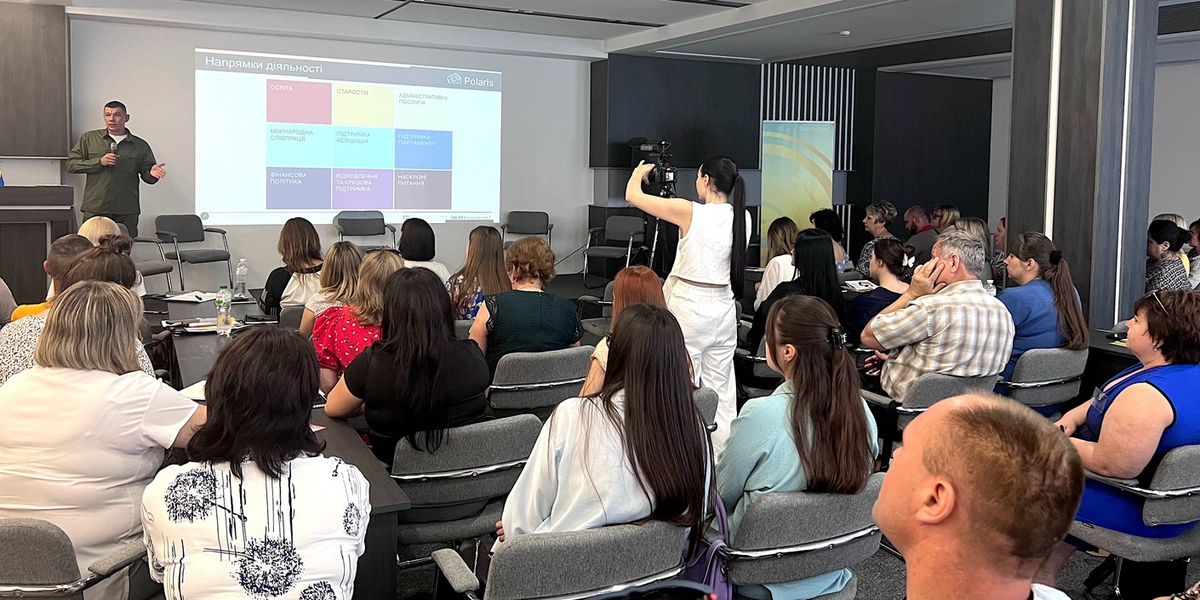
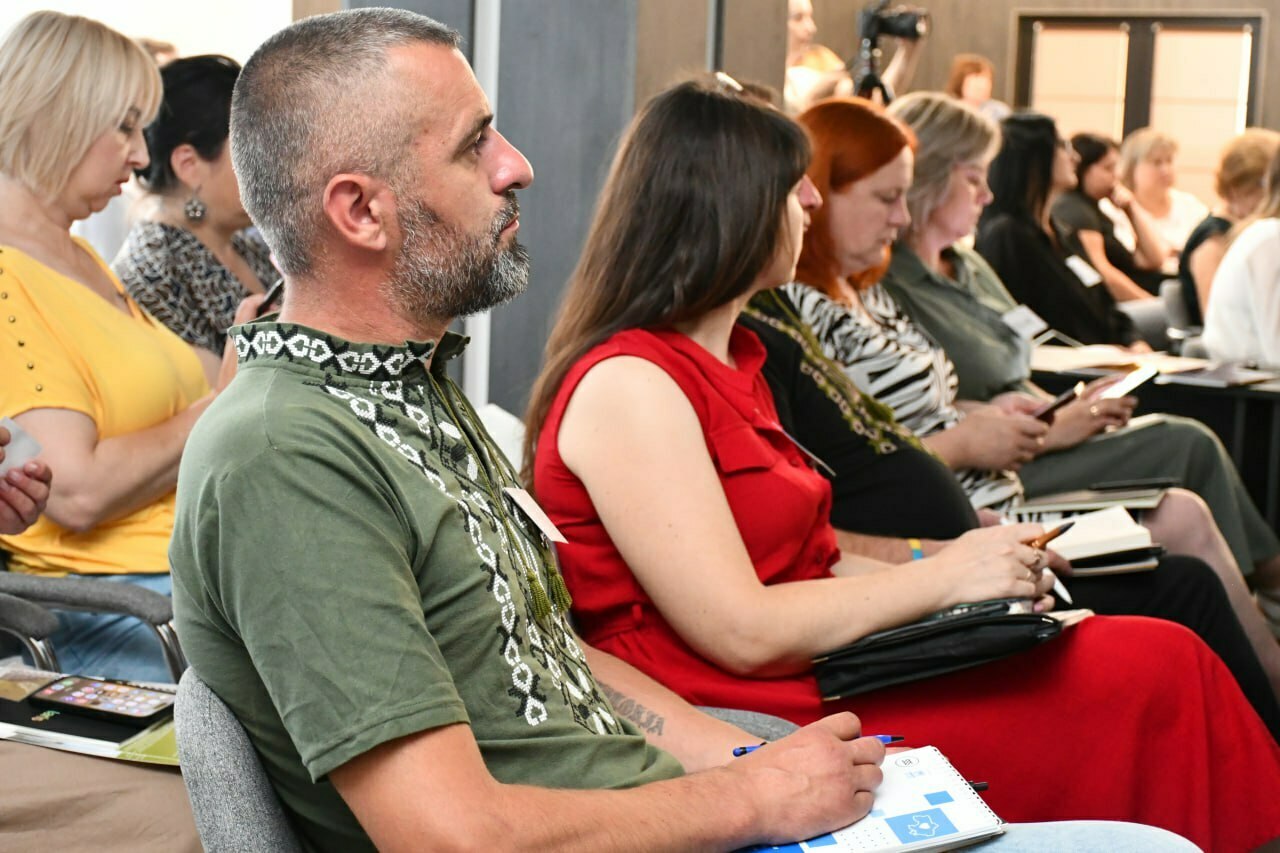
To support this, on 11 July, the first interactive regional meeting was held in Kropyvnytskyi, bringing together Polaris Programme experts, representatives of the Kirovohrad Regional Military Administration (RMA), district administrations, and local government officials responsible for veteran policy implementation in hromadas across the oblast. The event, held in a hybrid format, focused on the key challenges and prospects for developing veteran policy at the local level and brought together nearly 100 participants – including hromada heads, deputy heads, advisors, psychologists, veteran support officers, and other key stakeholders working daily with veterans and their families.
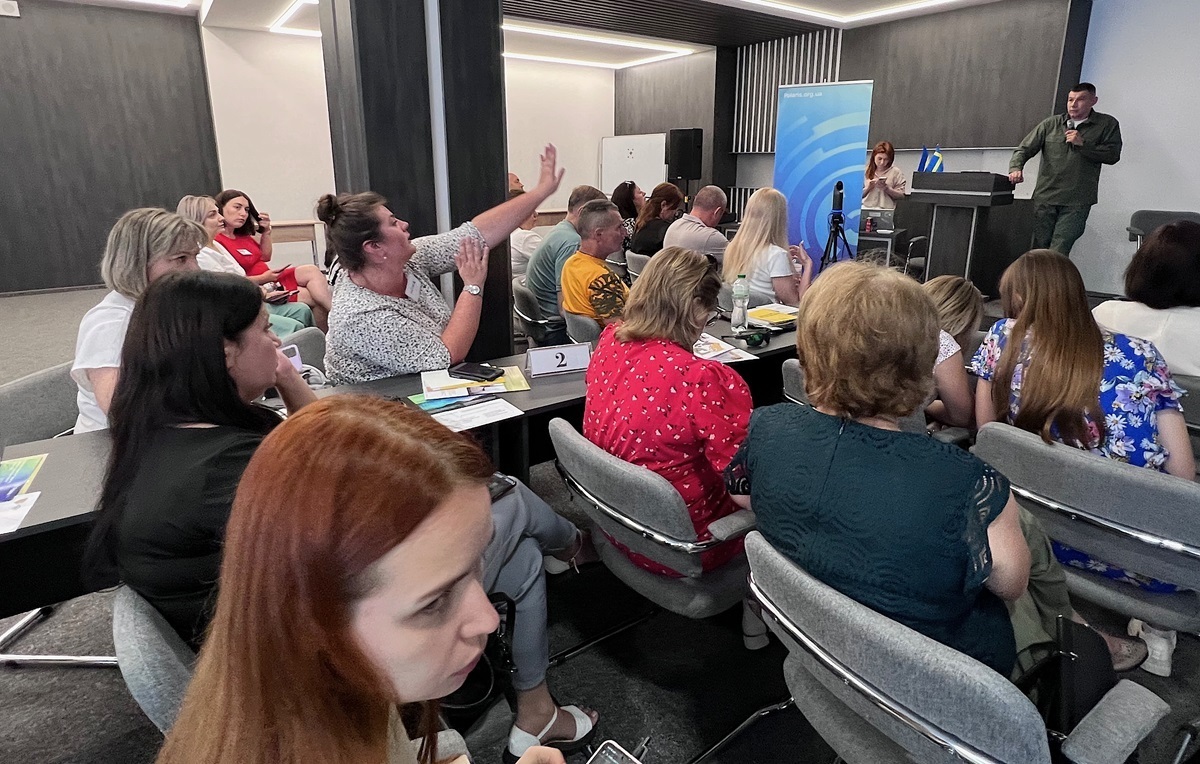
The meeting aimed not only to introduce the Polaris Programme’s approaches and its focus on integrating veterans’ perspectives into hromada governance, but also to create space for open dialogue, experience-sharing, the identification of key challenges, collaborative solution-finding, and practical learning.
During the event, Deputy Head of the Kirovohrad RMA Kateryna Koltunova stated:
“We must build a support system that works not on paper, but in real life – in our villages, towns, and cities. Every veteran should know where to turn and be sure they’ll receive real assistance.”

The regional meeting in Kropyvnytskyi was structured in four sequential blocks: a presentation, a discussion, an analytical-methodological segment, and a practical component. This format allowed participants to move step by step from concepts to practical tools and exchange of experience.
In the opening presentation, Polaris expert on integrating veterans’ perspectives into municipal work, Denys Chechel, presented the approaches being implemented under the programme. He emphasised that hromadas today can and should take an active role in shaping veteran policy:
“We are building a consistent approach that places the hromada at the centre – one that understands veterans’ needs, has the tools and partners to address them, and can act effectively today without waiting for centralised decisions,” said the expert.
After the presentation, Denys Chechel used Mentimeter for an interactive survey, enabling participants to see real-time results on veterans’ needs, hromadas’ challenges, and the regional veteran policy landscape.
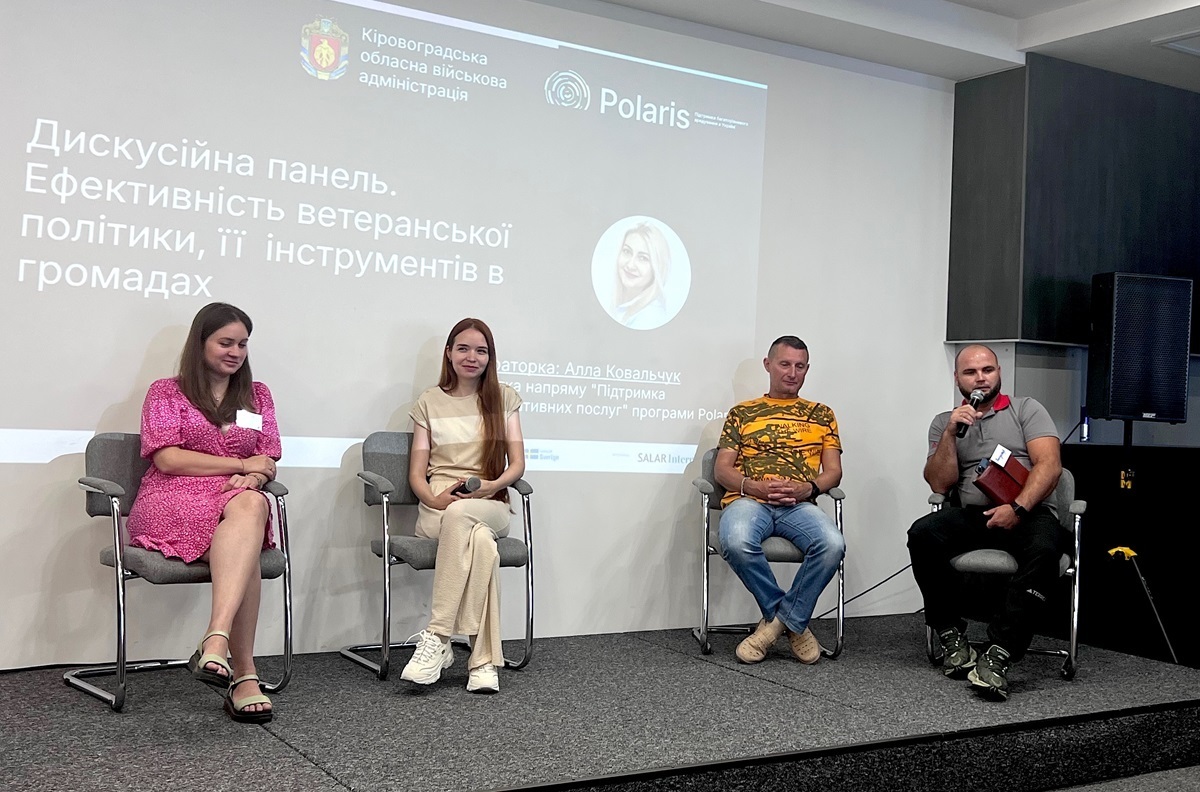
Next, participants joined a panel discussion on “Effective Veteran Policy”, moderated by Polaris expert Alla Kovalchuk. Hromada representatives shared their perspectives on the current mechanisms of veteran policy implementation, discussed existing barriers – including limited human resources, fragmented communication, and the stigmatisation of veterans – and highlighted local initiatives that are already delivering tangible results.
“Respect for veterans must go beyond words – it must be reflected in our daily actions. Society must create spaces of support, and the state must ensure effective adaptation mechanisms. Without this, we cannot speak of truly effective veteran policy,” said Volodymyr Mukhurov, advisor to the mayor of Znamianka on veteran affairs.
One of the most engaging contributions came from Yelyzaveta Kanevska, manager at Veteran Hub and lead on state policy and career consulting projects. She outlined what quality veteran infrastructure looks like, presented successful tools and practices, and shared best-case examples – including mobile offices, services within veteran spaces, and initiatives such as veteran employment and peer-to-peer support. She also shared criteria for evaluating the effectiveness of such initiatives and introduced the foundational “Veteran’s Journey” project, which has informed many follow-up research and advocacy efforts by the organisation.

During the event, participants had the opportunity to ask questions to the speakers and programme experts, and to share their views on effective practices and which services would be the most impactful and beneficial for veterans, female veterans, and their families.
The highlight of the event was the interactive role-playing workshop “Veteran Policy”, during which participants worked in targeted groups to develop implementation programmes for veteran policy in assigned territorial hromadas. These programmes focused on the development of rehabilitation and reintegration services for veterans and their families through the creation or expansion of relevant infrastructure – such as veteran hubs, inclusive employment centres, or rehabilitation facilities.
“This is not a one-time event – it is the beginning of systemic cooperation, where Kirovohrad oblast will have the opportunity to demonstrate new standards of veteran policy at the hromada level. We are not just collecting data – we are building solutions that will work, and what’s most important is the will to act,” summarised Denys Chechel.

The meeting served as a platform not only for sharing practices but also for forming a common understanding of what a strong, sustainable veteran policy at the local level should look like – one based on the real needs of veterans and the actual capacities of hromadas.
The event marked the beginning of the regional work that the Polaris Programme is initiating in partnership with the Kirovohrad Regional Military Administration and its territorial hromadas – starting from needs assessments to building formal partnerships. On 10 July, a selection process was also launched to identify six hromadas in the region for a one-year pilot partnership. This support will range from training programmes and improving local veteran information systems to developing individual veteran policy strategies and implementing targeted projects. Applications are open until 25 July 2025 via this link.

