
In Kyiv, the leadership and experts of the Polaris Programme “Supporting Multilevel Governance in Ukraine” held meetings with national partners to discuss further cooperation in supporting hromadas, developing local self-government and advancing recovery at the local level.
The meetings were attended by Susanna Dellans, Team Leader of the Polaris Programme and SALAR International Representative in Ukraine, Oleksandr Mazurkin, Programme Manager, and Polaris experts. This made it possible to discuss both systemic issues related to local self-government and specific areas of work with hromadas.
 The main part of the discussion with Vitaliy Bezhin, Minister for Communities, Territories and Internally Displaced Persons of Ukraine, focused on the Ministry’s updated mandate and opportunities for further cooperation with Polaris. The parties discussed where the Programme’s expertise could be most useful. “In particular, I outlined our priorities under the Ministry’s updated mandate: the division of powers between levels of government, reform of the State Fund for Regional Development, and preparing hromadas to work with European instruments. We very much count on Polaris’ expert support in these areas,” said Vitaliy Bezhin.
Specific areas discussed included developing mobile formats for service delivery in remote settlements, strengthening the role of starostas, and international municipal partnerships, with particular attention to the needs of frontline hromadas.

The Polaris team also met with the leadership and team of the State Agency for Restoration and Infrastructure Development of Ukraine. The discussion focused on the needs of hromadas and recovery priorities. Ivan Fedorov, Head of the Agency, outlined its key priorities for the near term, including supporting logistics in frontline areas, developing transport links with EU countries, and protecting critical infrastructure. 
Following the meetings, the parties identified further areas of cooperation between Polaris, the Ministry, and the Restoration Agency, including strengthening local self-government, supporting regional development and recovery, and helping hromadas work with European instruments. This includes ensuring that national-level decisions reflect the practical experience and needs of hromadas, while hromadas receive the support needed to implement them. 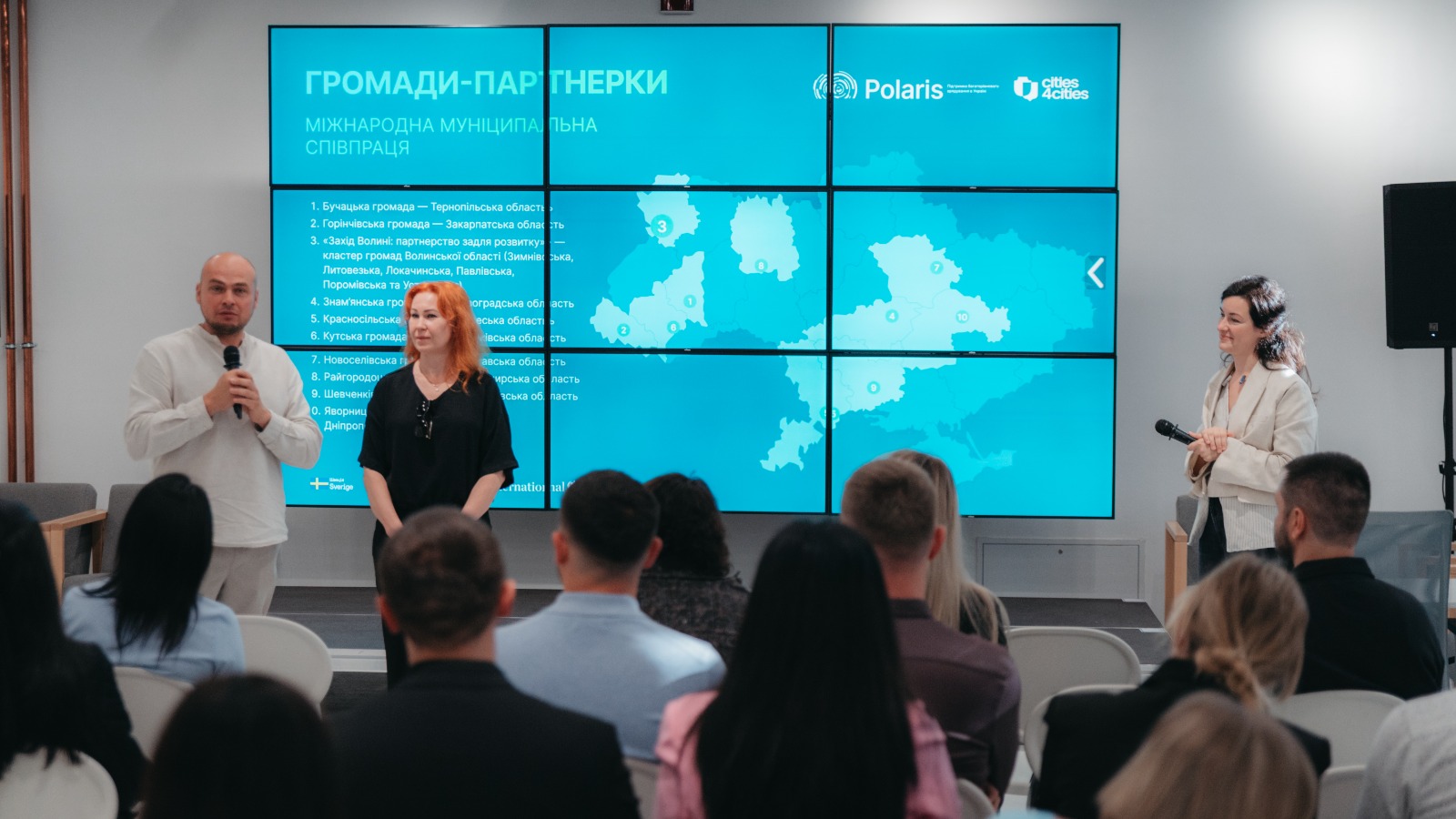

Photo credits: Ministry for for Communities, Territories and Internally Displaced Persons of Ukraine, State Agency for Restoration and Infrastructure Development of Ukraine.

